How we make money: Some links on this page are affiliate links, marked “Sponsored.” If you buy through one, we may earn a commission. It doesn’t change what we write. This article is general information, not medical advice.
A heating pad is one of the simplest things you can try for a sore back. The NHS suggests a heat pack or hot water bottle, wrapped in a towel, to relieve stiffness and muscle spasms.[1] Mayo Clinic notes that pain relievers and heat might be all that’s needed for back pain, and that most back pain gets better within a month of home treatment, especially in people under 60, though for many it lasts several months.[2]
Heat isn’t risk-free, though. Heating pads can get too hot and burn the skin, which is why Cleveland Clinic advises against using one while you sleep.[3] Here’s what the research shows, and how to use one without burning your skin.
In brief
- Heat can ease low back pain a little, for a short time. The best evidence is for heat wraps on back pain that started within the last 12 weeks.[4][5][6]
- Use the lowest setting, wrap the pad in a towel, and never use it while you sleep.[3][7] Keep moving too: bed rest isn’t recommended.[2]
- Call 911 if back pain comes with numbness around your genitals or anus, new bladder or bowel problems, or numbness or weakness in both legs.[1]
Does a heating pad help back pain?
Heat can help a little, mostly in the short term. A 2006 Cochrane review looked at 9 trials with 1,117 people. In a small number of them, it found moderate evidence that heat wraps give a small, short-term reduction in pain and disability for people with acute or subacute low back pain. The trials behind that finding tested wearable heat wraps, not plug-in heating pads. The reviewers also said the evidence overall is limited, and that better trials are needed.[4] Acute back pain usually lasts a few days to a few weeks, and subacute pain lasts 4 to 12 weeks.[5]
The American College of Physicians takes a practical view. Because most people with acute or subacute low back pain get better over time whatever they do, its guideline recommends non-drug treatments such as superficial heat (heat applied to the skin), with medicines as an option if you want them.[6]
Heat increases blood flow, which helps relax tight muscles.[8] That fits with how the NHS frames it: heat is for stiffness and muscle spasms, while ice is for pain and swelling.[1]
| Question | What we found | Strength | Source |
|---|---|---|---|
| Does heat ease low back pain? | In 2 trials with 258 people with acute or subacute back pain, heat wraps reduced pain after 5 days compared with a placebo pill. | Moderate | [4] |
| How does it compare with other treatments? | In a review of 46 trials in acute or subacute back pain, heat wraps were among the most effective short-term options for pain compared with an inactive treatment, alongside exercise. The authors noted the evidence is uncertain. | Uncertain | [9] |
| Does adding exercise help? | In one trial of 100 people, adding exercise to a heat wrap reduced pain further after 7 days. | Moderate | [4] |
| Is ice better than heat? | There’s too little evidence on cold to say, and studies comparing heat with cold disagree. | Conflicting | [4] |
| What about long-term back pain? | Heat isn’t on the ACP’s first-choice list for chronic low back pain, which starts with exercise. | Not graded | [6] |
Sponsored · Back pain program
Want more than a heating pad for your back?
The Back Pain Breakthrough: short follow-along videos focused on lower back pain, from physical therapist Dr. Steve Young, including a gentle move you can do in bed. Instant access on any device.
Official site · opens in a new tab
Heat or ice for back pain?
Both have a place, and the research doesn’t pick a clear winner.[4] Here’s how the main health sources split it:
- A new injury or new back pain: MedlinePlus says one good method for acute low back pain is to use ice for the first 48 to 72 hours, then switch to heat.[10] Cleveland Clinic explains that heat may make a fresh injury feel worse at first.[8] If there’s an injury or inflammation, the extra blood flow from heat could increase swelling.[11]
- Stiffness, muscle spasms or a lingering ache: this is where heat tends to help.[1][8] For back spasms, Cleveland Clinic suggests either ice or heat.[12]
- Neither one helps: see a doctor to find out what’s behind the pain.[8]
Types of heat you can use at home
Electric heating pads
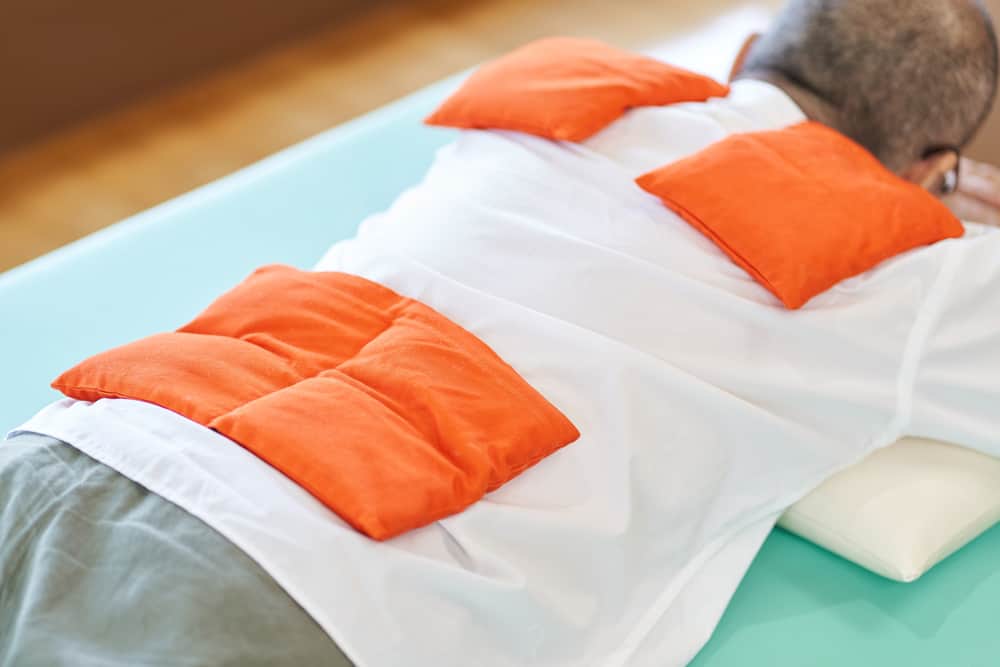
A plug-in pad brings targeted warmth to the sore area. Take it off if the area gets uncomfortably warm.[8] In its pregnancy guidance, Mayo Clinic advises setting a heating pad to the lowest temperature and wrapping it in a towel to lower the chance of burns.[7]
Heat wraps and heat packs
Cleveland Clinic mentions stick-on heating pads as well as plug-in ones.[8] The NHS notes that you can buy heat packs from pharmacies.[13] The moderate evidence in the Cochrane review comes from trials of heat wraps.[4]
Hot water bottles
A hot water bottle wrapped in a towel is the NHS’s own suggestion for back stiffness.[1] Wrap it every time, just as you would a heating pad.[7]
Moist heat
Moist heat, from a hot shower or bath or a moist heat pack, may work better than dry heat.[3] Cleveland Clinic suggests keeping bath or shower water between 92 and 100 degrees Fahrenheit.[8] You can buy moist heat pads, or make a simple one at home: heat a damp washcloth in the microwave for about 20 seconds, test it to make sure it isn’t too hot, then wrap it in a dry towel before you put it on.[11]
What to look for in a heating pad for back pain
We haven’t tested heating pads, so this isn’t a ranked list of products. These are the points the health sources and safety notices below support.
- A low setting you can rely on. Mayo Clinic’s advice is to use the lowest temperature.[7]
- A moist heat option, if you prefer it. Moist heat may work better than dry heat for back pain.[3]
- A clean recall record. The FDA posts medical device recalls, including heating pads, on its website. Search the brand and model before you buy.[14]
How to use a heating pad safely
- Wrap it and start low. Put a towel between the pad and your skin, and use the lowest setting.[7][12]
- Take it off if it feels too warm.[8] The most serious burns can be painless, so pain isn’t a reliable warning.[15]
- Never sleep with it on. Heating pads can get too hot and burn the skin.[3]
- Follow your pad’s instructions on folding. One neck and shoulder pad was recalled in 2026 because, according to its maker, it overheated when folded during use and didn’t shut itself off. The company reported four serious injuries.[14]
- Don’t combine it with pain cream. Mayo Clinic says not to use topical pain relievers, such as creams, with a heating pad.[16]
- Don’t use one on children or older adults. Cleveland Clinic advises against using heating pads on them.[3] Adults over 55 and children under 5 have thinner skin, which raises their risk of complications from a severe burn.[15]
- Be careful if you have diabetes. Nerve damage from diabetes can make it harder to feel heat.[17] MedlinePlus advises people with diabetes not to use a heating pad or hot water bottle on their feet, because their skin doesn’t respond normally to heat and can burn badly.[18]
Pair heat with gentle movement
The NHS advises staying active, carrying on with your daily activities, and trying exercises and stretches for back pain. It also says not to stay in bed for long periods.[1] Mayo Clinic suggests light activity such as walking. Stop anything that makes the pain worse, but don’t avoid activity out of fear of pain.[2] In one trial, adding exercise to a heat wrap reduced pain more than the heat wrap alone.[4]
Sponsored · Back pain program
Ready to add gentle movement to the heat?
The Back Pain Breakthrough is a short follow-along video routine focused on lower back pain, made by a physical therapist. Instant access on any device.
Go gently after a new injury. MedlinePlus warns that starting stretching and strengthening exercises too soon can make the pain worse, and that a physical therapist can tell you when to begin.[10] A physical therapist can also teach you exercises to improve flexibility and posture and strengthen your back and stomach muscles, which can help keep the pain from coming back.[2] If you’d like a place to start, see our lower back stretches, and stop any exercise that makes your pain worse.[1]
Other things that help at home
- Pain relief. The NHS suggests an anti-inflammatory such as ibuprofen, though it may not suit everyone. It says acetaminophen (Tylenol) on its own isn’t recommended for back pain, but it may be used with another painkiller. Check with a pharmacist or doctor if you’re not sure which is right for you.[1]
- A better sleeping position. MedlinePlus suggests lying in a curled-up, fetal position with a pillow between your legs. If you sleep on your back, a pillow or rolled towel under your knees can relieve pressure.[10]
- Other hands-on options. For back pain caused by tense or overworked muscles, massage might help.[2] Our guide to managing back pain at home covers more ideas.
When to get medical help
Call 911 or go to the ER if you have back pain and:[1]
- pain, tingling, weakness or numbness in both legs
- a loss of feeling around your genitals or anus
- changes in your bladder or bowels, such as trouble urinating, or losing control of your bladder or bowels
- changes in sexual feeling, or trouble getting or keeping an erection or reaching orgasm
- chest pain
- pain that started after a serious accident, such as a car crash
Don’t drive yourself. Ask someone to take you, or call 911.[1]
Get help the same day if you have back pain and:[1]
- you feel hot, cold, shivery or generally unwell
- the pain is severe and started suddenly, or it’s getting worse quickly
See your doctor if your back pain:[1]
- hasn’t improved after a few weeks of home treatment, or is stopping you from doing everyday things
- comes with weight loss you can’t explain
- comes with a lump or swelling in your back, or your back has changed shape
- doesn’t improve with rest, or is worse at night
- is worse when you sneeze, cough or have a bowel movement
- is high in your back, between your shoulders, rather than low down
- worries you, or you’re struggling to cope
Common questions
How long should I leave a heating pad on my back?
Cleveland Clinic suggests keeping each heat session under 20 minutes.[8] Check your pad’s instructions too, and never leave it on overnight.[3]
Can I use a heating pad on my back while pregnant?
Mayo Clinic lists a heating pad, hot pack or warm water bottle on your back among its tips for back pain in pregnancy, with the pad on its lowest setting and wrapped in a towel. Call your healthcare professional right away if back pain comes with vaginal bleeding, fever, cramping or contractions, or burning when you urinate. These can be signs of preterm labor or a urinary tract infection. Mayo Clinic also advises contacting your care team if back pain lasts more than two weeks.[7]
What should I do if a heating pad burns my skin?
For a minor burn where the skin isn’t broken, MedlinePlus advises running cool water (not ice water) over it, or soaking it, for at least 5 to 30 minutes, then covering it with a dry, sterile bandage. Call 911 if the burn is about the size of your palm or larger, looks white or blackened, or you aren’t sure how serious it is. For a minor burn, contact your doctor if it still hurts after 48 hours, or right away if you see signs of infection such as pus, fever, increasing pain or red streaks.[15]
Can I use a heating pad for sciatica?
Yes. The NHS suggests holding heat packs to the painful areas. It also advises keeping up your normal activities as much as you can. Sciatica usually gets better in a few weeks to a few months.[13] For pain at night, see our guide to sleeping with sciatica.
Sponsored · Back pain program
Prefer a routine you can follow along with?
The Back Pain Breakthrough is a gentle at-home routine from a physical therapist, focused on lower back pain. See today’s price on the official site.
Official site · opens in a new tab
Free · From APM Health
Get our free morning movement routine
A short routine for easing a stiff back into the day. Sign up now and we’ll email it as soon as it’s ready.
- Free
- Sent as soon as it’s ready
- One email a week at most
Unsubscribe any time. Privacy policy
How we checked this article
Medical review: pending. A clinician hasn’t reviewed this article yet. We last checked it against the sources below on November 6, 2026.
Sources
- NHS. Back pain. Page last reviewed March 5, 2026.
- Mayo Clinic. Back pain: Diagnosis and treatment. September 26, 2024.
- Cleveland Clinic. Home Remedies To Help Your Back Pain. August 9, 2023.
- French SD, Cameron M, Walker BF, Reggars JW, Esterman AJ. Superficial heat or cold for low back pain. Cochrane Database of Systematic Reviews. 2006.
- National Institute of Arthritis and Musculoskeletal and Skin Diseases (NIAMS). Back Pain. Last reviewed February 2023.
- Qaseem A, Wilt TJ, McLean RM, Forciea MA. Noninvasive treatments for acute, subacute, and chronic low back pain: a clinical practice guideline from the American College of Physicians. Annals of Internal Medicine. 2017.
- Mayo Clinic. Back pain during pregnancy: 7 tips for relief. March 12, 2024.
- Cleveland Clinic. Ice vs. Heat: Which Is Better for Your Pain? February 5, 2025.
- Gianola S, Bargeri S, Del Castillo G, et al. Effectiveness of treatments for acute and subacute mechanical non-specific low back pain: a systematic review with network meta-analysis. British Journal of Sports Medicine. 2022.
- MedlinePlus. Low back pain – acute. Review date June 27, 2026.
- Cleveland Clinic. Ice or Heat: What’s Better for Soothing Arthritis Pain? September 6, 2024.
- Cleveland Clinic. Back Spasms. Last updated April 26, 2022.
- NHS. Sciatica. Page last reviewed December 3, 2024.
- U.S. Food and Drug Administration (FDA). Heating Pad Recall: Navajo Manufacturing Company Removes Handy Solutions Neck & Shoulders Heating Pad. Content current as of March 25, 2026.
- MedlinePlus. Burns. Review date April 9, 2026.
- Mayo Clinic. Arthritis pain: Treatments absorbed through your skin. May 17, 2025.
- Centers for Disease Control and Prevention (CDC). Your Feet and Diabetes. Last reviewed May 15, 2024.
- MedlinePlus. Diabetes – taking care of your feet. Review date May 18, 2026.