How we make money: Some links on this page are affiliate links, marked “Sponsored.” If you buy through one, we may earn a commission. It doesn’t change what we write. This article is general information, not medical advice.
A migraine is a type of headache, and it usually brings more than head pain. The pain is often throbbing and on one side, it can get worse when you move, and it can come with nausea and strong sensitivity to light and sound.[1] A tension headache, the most common kind, feels more like pressure on both sides of your head, and you can usually carry on with your day.[2][3] Most headaches go away on their own and aren’t a sign of something more serious, but a few need emergency care.[4] The signs are listed further down this page.
In brief
- Migraine pain is usually throbbing and made worse by routine activity, often with nausea or sensitivity to light and sound. Tension-type headaches press on both sides of the head and routine activity doesn’t make them worse.[5]
- Food triggers vary from person to person, and much of the evidence is weak or mixed.[6] Caffeine withdrawal has some of the stronger evidence.[7] A headache diary can help you find your own triggers.[1]
- A headache that starts suddenly and is extremely painful is an emergency,[4] and so is the worst headache of your life.[3] So is a headache with weakness, confusion, a seizure, loss of vision or trouble speaking.[4]
Migraine vs headache: how to tell the difference
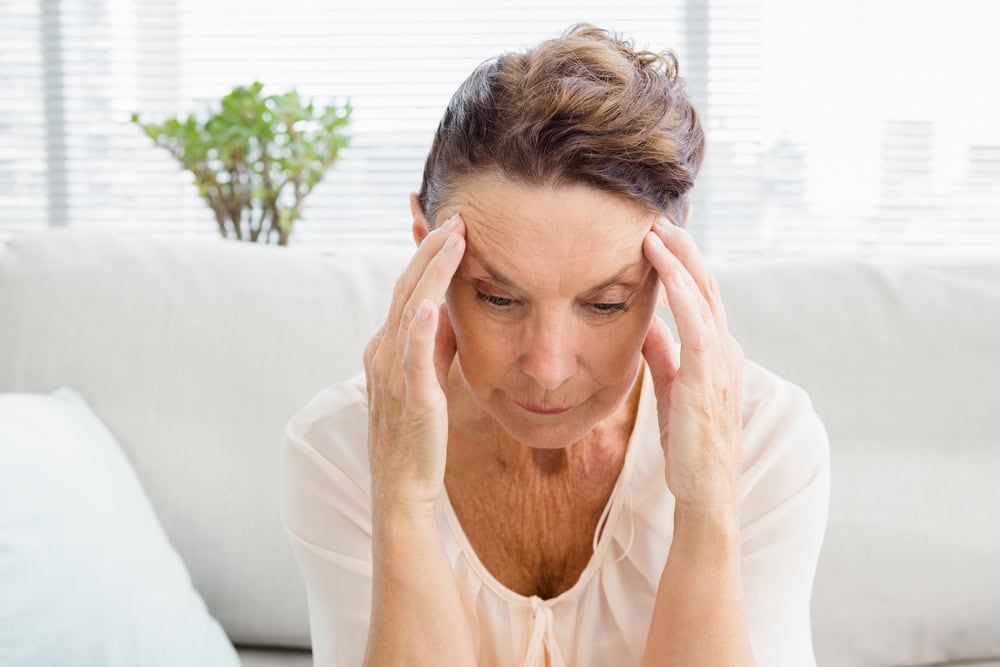
Headache is the broad term for pain or discomfort in the head, scalp or neck.[8] Migraine is one specific condition that causes attacks of headache along with other symptoms.[1] So the migraine vs headache question usually means: how does a migraine differ from an everyday tension headache? NICE, the UK’s health guidance body, separates the three main types by these features.[5]
| Feature | By headache type |
|---|---|
| Where it hurts | Tension-type: Both sides of the head Migraine: One or both sides Cluster: One side, around or above the eye and along the side of the head or face |
| How it feels | Tension-type: Pressing or tightening, not pulsing Migraine: Pulsing Cluster: Varies: sharp, boring, burning, throbbing or tightening |
| How bad it is | Tension-type: Mild or moderate Migraine: Moderate or severe Cluster: Severe or very severe |
| Effect on activity | Tension-type: Routine activity doesn’t make it worse Migraine: Routine activity makes it worse, or you avoid activity Cluster: Restlessness or agitation |
| Other symptoms | Tension-type: None Migraine: Sensitivity to light or sound, nausea or vomiting, sometimes aura Cluster: On the same side as the pain: red or watery eye, blocked or runny nose, swollen eyelid, sweating on the forehead or face, small pupil or drooping eyelid |
| How long it lasts | Tension-type: 30 minutes to continuous Migraine: 4 to 72 hours in adults Cluster: 15 to 180 minutes |
The clearest clues are how you respond to movement and what comes with the pain. Physical activity tends to make migraine pain worse but doesn’t affect tension-type pain, and tension-type headaches don’t usually come with nausea, vomiting or visual disturbances. Sensitivity to light or sound can happen with a tension-type headache, but it isn’t common.[9]
The types can overlap. Mild migraines can be particularly hard to tell apart from tension-type headaches,[9] and you can have tension headaches as well as migraine.[3] There’s no specific test that proves a headache is a migraine. A doctor diagnoses it from your symptoms and family history, along with an exam.[10]
Headache types and where you feel them
Tension-type headache
This is the most common type of headache.[3] You feel it on both sides of your head, face or neck, as if something is pressing on your head or being tightened around it.[2] Mayo Clinic describes tightness or pressure across the forehead or on the sides and back of the head, with tenderness in the scalp, neck and shoulder muscles.[9]
Common causes include stress, sleep problems and caffeine.[2] Holding your head in one position for a long time, as with computer work, can also bring one on.[3] Tension-type headache is called chronic when it happens on 15 or more days a month for more than 3 months.[5]
Migraine
Migraine usually causes a throbbing headache, often on one side of the head, that can be severe.[1] The pain can sit behind the eye or in the back of the head and neck.[10] Attacks usually last between 4 hours and 3 days.[1] Migraine is called chronic when headaches happen on 15 or more days a month for more than 3 months, with at least 8 of those days having migraine features.[5] Migraine affects about one in five women and one in 16 men.[11]
An attack can move through four stages, though not everyone goes through all of them:[11]
- Prodrome. One or two days before, you might notice mood changes, food cravings, neck stiffness, needing to pee more or frequent yawning.[11]
- Aura. Some people get warning signs such as zigzag lines or flashing lights, numbness or tingling, dizziness or difficulty speaking.[1] Aura symptoms build gradually and last 5 to 60 minutes.[5]
- Attack. The headache itself, with sensitivity to light and sound, and nausea or vomiting.[11]
- Postdrome. Afterward you might feel drained, confused and worn out for up to a day.[11]
Migraine attacks just before or during a period are called menstrual migraines, and they’re often longer and more severe than other attacks.[1] Migraine is also a risk factor for stroke, and the risk is higher in people who smoke, especially women who have migraine with aura. MedlinePlus says to contact your provider if you take birth control pills and have migraines.[10] NICE advises against routinely offering combined hormonal contraceptives to women and girls who have migraine with aura.[5]
Cluster headache
Cluster headache is rare and severe, and it’s typically the most painful type of headache.[12] It causes a sharp, burning or piercing pain, usually on one side of the head around the eye.[13] The pain can spread to other areas of the face, head and neck.[12]
Attacks last between 15 minutes and 3 hours and can happen several times a day for weeks or months. They may then stop for weeks, months or years.[13] The eye on the painful side may redden and water, and the eyelid may droop.[13] The pain can be bad enough that people pace, or sit and rock back and forth.[12]
Secondary headaches
Tension-type headache, migraine and cluster headache are primary headaches, which means another condition isn’t causing them. A secondary headache is a symptom or sign of something else.[14]
The NHS lists these common causes of headaches: a cold or flu, not drinking enough fluids, not eating regular meals, drinking too much alcohol, eyesight problems, bad posture and hormone changes around periods or menopause.[4] In rare cases a headache is a sign of something serious, such as bleeding around the brain, a brain infection like meningitis, a brain tumor, very high blood pressure or carbon monoxide poisoning.[8] The box further down lists the symptoms that should send you for help.
Medication-overuse headache
Pain medicine taken too often can itself cause headaches. These are called medication-overuse or rebound headaches. They tend to happen every day or nearly every day, and they improve with pain medicine and then return as it wears off.[15]
Guidance differs, and these are different kinds of statement. The first two are cautions for people taking pain medicine. The third is a diagnostic guide for doctors.
- The NHS says to try not to take painkillers for migraine for more than 2 days a week.[1]
- MedlinePlus says regularly taking pain medicine more than 3 days a week can lead to this type of headache.[8]
- NICE tells doctors to consider it when a headache developed or got worse during 3 months or more of taking triptans, opioids, ergots or combination painkillers on 10 or more days a month, or acetaminophen, aspirin or an NSAID on 15 or more days a month.[5]
The risk depends on the medicine. Mayo Clinic rates triptans and opioids as high risk, simple pain relievers as low risk, and says a newer group of migraine medicines called gepants doesn’t seem to cause these headaches. It advises contacting a healthcare professional if you need headache medicine more than twice a week.[15]
Medication-overuse headaches most often go away after stopping the pain medicine.[15] NICE says treatment means withdrawing the overused medicine for at least a month, and warns that headaches are likely to get worse before they improve and that there may be withdrawal symptoms. It tells doctors to give close follow-up and support, and to consider a specialist referral for people using strong opioids, for whom it points to separate withdrawal guidance.[5] Mayo Clinic notes that stopping can make pain hard to manage in the short term and that a healthcare professional can help, so talk to one before you stop a prescribed medicine.[15]
Migraine triggers, including food and drink
Common migraine triggers include having your period, anxiety and depression, stress and tiredness, skipping meals, too much caffeine and not getting enough regular exercise.[1] Bright or flashing lights, loud sounds, strong smells, changes in sleep and changes in the weather can also bring on an attack.[11] For cluster headache, the most common triggers are alcohol and smoking.[12]
Foods that trigger migraines
MedlinePlus lists the most common food triggers as chocolate, dairy foods (especially certain cheeses), foods with monosodium glutamate (MSG), foods with tyramine (red wine, aged cheese, smoked fish, chicken livers, figs and certain beans), meats containing nitrates (bacon, hot dogs, salami and cured meats), some fruits (avocado, banana and citrus), onions, nuts and seeds, and processed, fermented, pickled or marinated foods.[10] Mayo Clinic adds salty foods and the sweetener aspartame.[11]
That’s a long list, and much of it rests on what people report. A 2020 systematic review of 43 studies rated the overall quality of evidence as low, since most of the studies on diet patterns and triggers were surveys or cross-sectional studies. Alcohol and caffeine were the triggers most often linked with more frequent attacks. Four of the review’s six authors were affiliated with Eli Lilly.[6] The table below sets out the evidence for each.
| Food or drink | What the evidence says |
|---|---|
| Caffeine | A 2016 review found caffeine withdrawal has some of the strongest evidence as a headache trigger, from several positive challenge studies.[7] The NHS also lists too much caffeine as a migraine trigger.[1] |
| MSG | The same review also put MSG dissolved in liquid among the strongest evidence.[7] A 2016 systematic review found no consistent effect when MSG was taken with food, and said studies of MSG in liquid weren’t properly blinded. Its lead author’s listed affiliation is the International Glutamate Technical Committee.[16] |
| Alcohol | Modest evidence, from observational studies, that it brings on headaches in some people.[7] Mayo Clinic singles out wine.[11] |
| Aspartame | Conflicting: two challenge studies were positive and two were negative.[7] |
| Chocolate | Often reported, but all three challenge studies in a 2020 review failed to find a significant difference from placebo. The authors concluded there isn’t enough evidence that it’s a trigger.[17] |
| Gluten and histamine foods | Modest observational evidence in subgroups of people.[7] |
| Nitrates | Listed as a possible trigger by MedlinePlus and Cleveland Clinic.[10][14] |
Food cravings can be an early sign of a migraine,[11] and researchers have asked whether eating chocolate before an attack is a real trigger or a craving from the start of the attack.[17] The NHS, MedlinePlus and Mayo Clinic all list skipped meals as a trigger.[1][10][11]
Do special diets help?
Possibly, for some people, but the research is early. Two of three randomized trials found that an elimination diet of IgG-positive foods lowered how often people had headaches or migraines compared with their starting point.[7] Low-fat diets and diets high in omega-3 and low in omega-6 fats each lowered attack frequency in a randomized trial. A ketogenic diet beat a standard diet in a single nonrandomized study. The reviewers call these results preliminary until larger trials repeat them.[18] A 2020 systematic review concluded that a few small randomized trials had tested diets without strong results.[6]
A later trial in 182 adults with migraine, published in The BMJ in 2021, found that diets higher in omega-3 fats reduced headache hours and headache days compared with a control diet. Lowering linoleic acid, an omega-6 fat, as well appeared to add to the benefit on headache days. The diets didn’t significantly improve scores on a questionnaire about headache impact on quality of life.[19] NCCIH describes the omega-3 fats in that trial as coming from high-fat fish, and linoleic acid as coming from corn, soybean and other vegetable oils and some nuts and seeds. It notes that studies of omega-3 supplements haven’t shown the same effects as omega-3-rich foods.[20]
Keep a headache diary
Rather than cutting out everything on the list, the NHS advises avoiding the things you know trigger your attacks, and a diary can help you work out what those are.[1] NICE suggests recording for at least 8 weeks:[5]
- how often headaches happen, how long they last and how severe they are
- any other symptoms
- every medicine you take for them, including nonprescription ones
- possible triggers, and how headaches relate to your periods
MedlinePlus also suggests noting what you ate and drank over the past 24 hours, how much you slept, and what you were doing right before the pain started, then going through the diary with your provider.[8]
What helps
During a headache or migraine attack
For most headaches the NHS suggests drinking plenty of water and trying to relax, and advises not skipping meals, not sleeping more than usual, not straining your eyes for a long time and not drinking alcohol.[4]
- Tension-type headache. Painkillers such as acetaminophen, aspirin or ibuprofen can help. Children under 16 should not take aspirin, and acetaminophen is the first choice in pregnancy. Relaxing activities such as exercise, yoga and massage may also help, and if you have neck pain with your headaches, the NHS suggests a low, firm pillow and heat or cold packs.[2]
- Migraine. Try lying down in a darkened room.[1] A cool cloth on your head may help, and drink water to avoid getting dehydrated, especially if you’ve vomited.[8] Treatment includes painkillers, medicines called triptans and gepants, and medicines for nausea. If you take painkillers, take them as soon as the headache starts.[1]
- Cluster headache. Ordinary painkillers such as acetaminophen and ibuprofen don’t work. The main treatments once an attack has started include triptans given by injection or nasal spray, oxygen breathed through a mask, and a device that gives mild electrical pulses to the back of the neck.[13]
Preventing migraine attacks
Things you can do yourself include eating meals at regular times, staying hydrated, limiting caffeine and alcohol, getting regular exercise and plenty of sleep, keeping to a healthy weight and managing stress.[1] Too much caffeine and caffeine withdrawal are both listed as migraine triggers.[1][10] Treatment to prevent attacks can include medicines such as beta blockers, antidepressants or medicines for epilepsy, along with acupuncture, relaxation techniques, cognitive behavioral therapy (CBT) and vitamin B2.[1] NICE suggests acupuncture for migraine when preventive medicines haven’t worked or aren’t suitable.[5]
The evidence for nondrug options is uneven. NCCIH says acupuncture can help with headaches, but much of the benefit may come from expectation and placebo responses. Some studies suggest biofeedback may help with tension headaches and migraines, but not all agree. For massage, relaxation techniques, spinal manipulation and tai chi, it says the evidence is too limited or inconsistent to draw conclusions.[20] Coenzyme Q10, feverfew, magnesium and riboflavin might reduce migraine frequency, but the evidence is small. The American Academy of Neurology stopped recommending butterbur because of concerns about liver toxicity. Some supplements can interact with medicines, so talk with your provider before trying one.[20]
To prevent tension headaches, the NHS says an antidepressant called amitriptyline is sometimes recommended.[2] NICE suggests considering a course of acupuncture for chronic tension-type headache.[5]
Injections and devices for specific headache types
Some treatments are used only for particular types of headache. NICE recommends botulinum toxin type A injections as an option for preventing chronic migraine in adults, but only after at least 3 preventive medicines haven’t worked, aren’t tolerated or aren’t suitable. It sets similar conditions for CGRP inhibitors, another group of preventive medicines.[5] Noninvasive devices that stimulate nerves can reduce migraines or make them less painful,[21] though MedlinePlus says their exact role remains unclear.[10] For cluster headache, when other treatments haven’t worked, surgery to implant a small device is rarely offered.[13] One type delivers electrical signals to the occipital nerve in the scalp.[22]
If treatments aren’t helping, or your symptoms are getting worse, you may be referred to a specialist.[1] You’ll probably see your primary care provider first, who might then refer you to a neurologist.[21] Our guide to primary care doctors and pain specialists explains how those roles differ.
Stress, sleep and long-term pain
Stress can make headaches worse,[4] and if sleep problems may be causing your headaches, the NHS suggests trying to change your sleeping habits.[2] For more on this, see our guides to chronic pain and sleep, relaxation and pain and the psychology of pain.
Sponsored · Pain app · Web, iPhone & Android
Living with long-term pain? Try a free 2-minute pain test
PainApp is built on Pain Reprocessing Therapy. Alongside the free test, the app gives you audio lessons, an AI pain coach and a pain tracker.
- Free pain test
- 2 min to finish
- 3 days free trial
Free test · 3-day free trial on the app, cancel anytime
When to see a doctor
See a doctor if:
- you regularly get headaches, or a headache isn’t getting better after treating it yourself or is getting worse[4]
- your migraine attacks are severe, getting worse, lasting longer than usual or happening more than once a week, or you regularly get migraine before or during your period[1]
- your headache pattern changes or your headaches suddenly feel different[9]
- you need headache medicine more than twice a week[15]
- your headaches are more severe when you lie down[3]
Get medical help right away if:
- you have a headache with vision or eye problems, or one that’s triggered or made worse by coughing, sneezing, bending down or exercising[4]
- you have a headache and you’re vomiting[4]
- you have a headache with jaw pain when eating or a sore, tender scalp,[4] or with weight loss[8]
- your headache gets worse over 24 hours[8]
- a migraine has lasted longer than 72 hours, aura symptoms last longer than 1 hour, or you have a migraine attack and you’re pregnant or have just had a baby[1]
- this is the first headache you’ve ever had and it interferes with daily life[8]
- you have a history of cancer and a new headache, or your immune system is weakened by disease or medicines[8]
- a child has a headache that’s getting worse or wakes them at night[4]
- a child under 12 has a headache when they wake up in the morning, one triggered or made worse by coughing, sneezing or bending down, one with vomiting, or one with a squint or an inability to look upward[2]
Call 911 or go to the ER if you or a child has a headache and any of these:
- it came on suddenly and is extremely painful or feels explosive, which may be a sign of bleeding on the brain[4][8][23]
- it’s the worst headache of your life, even if you regularly get headaches[3][8][10][22]
- numbness or weakness in the body or face, or trouble moving your arms or legs[1][4]
- difficulty speaking, balancing, walking or remembering things, especially if you haven’t had this with a headache before[3][4]
- drowsiness, confusion or a seizure[4]
- loss of vision, or blurred or double vision[1]
- repeated vomiting[3][22]
- a very high temperature, a stiff neck, bright lights bothering you, or a rash that doesn’t fade when a glass is rolled over it[4]
- shortness of breath[15]
- a head injury within the last 3 months, even a minor fall or bump, especially if the headache is getting worse[4][12]
- extreme pain and the white of the eye is red, or severe pain in just one eye with redness[2][8]
- a drooping eyelid, or one pupil smaller than the other, for the first time[13]
- it keeps getting worse even with rest and pain medicine,[15] or worsens over days and changes in pattern[12]
- it’s a new type of headache that lasts, especially if you’re older than 50[15]
- it happens when you’re upright and goes away when you lie flat[15]
- in a child under 12: vision problems, difficulty speaking, swallowing, balancing or walking, drowsiness or a persistent lack of energy, or a headache that starts within 5 days of a head injury[2]
Don’t drive yourself to the ER. Ask someone to drive you, or call 911, and bring any medicines you take.[4]
Common questions
Can you have a migraine without a headache?
Yes. Aura symptoms can happen with or without a headache,[5] and a headache doesn’t always follow an aura.[10] Numbness or weakness can also be a sign of a stroke,[11] and MedlinePlus says to call 911 for speech, vision or movement problems or loss of balance, especially if you haven’t had these with a migraine before.[10]
Is it a sinus headache or a migraine?
It’s often a migraine. Mayo Clinic says studies have shown that most people who see a provider for sinus headaches are found to have migraines instead. Sinusitis usually follows a viral infection or cold and comes with thick, discolored mucus and a reduced sense of smell. It usually isn’t associated with nausea, vomiting or being bothered by noise or bright light.[24]
Do I need a brain scan?
Usually not for a typical migraine.[10] NICE tells doctors not to refer people diagnosed with tension-type headache, migraine, cluster headache or medication-overuse headache for imaging solely for reassurance.[5] A CT or MRI may be ordered if you have danger signs or have been having headaches for a while.[8]
Do migraines get better with age?
Most people find their attacks slowly get better as they get older.[1] Migraines tend to peak during your 30s and then gradually become less frequent, and they generally improve after menopause.[11]
Free · From APM Health
Get our free morning movement routine
A short routine for easing stiff joints and muscles into the day. Sign up now and we’ll email it as soon as it’s ready.
- Free
- Sent as soon as it’s ready
- One email a week at most
Unsubscribe any time. Privacy policy
How we checked this article
Medical review: pending. A clinician hasn’t reviewed this article yet. We last checked it against the sources below on November 9, 2026.
Sources
- NHS. Migraine. Page last reviewed March 10, 2026.
- NHS. Tension headaches. Page last reviewed August 1, 2025.
- MedlinePlus. Tension headache. Review date October 27, 2025.
- NHS. Headaches. Page last reviewed April 17, 2024.
- National Institute for Health and Care Excellence (NICE). Headaches in over 12s: diagnosis and management. Clinical guideline CG150. Last updated June 3, 2025.
- Hindiyeh NA, Zhang N, Farrar M, Banerjee P, Lombard L, Aurora SK. The role of diet and nutrition in migraine triggers and treatment: a systematic literature review. Headache. 2020;60(7):1300-1316.
- Martin VT, Vij B. Diet and headache: part 1. Headache. 2016;56(9):1543-1552.
- MedlinePlus. Headache. Review date October 27, 2025.
- Mayo Clinic. Tension headache: symptoms and causes. Accessed November 9, 2026.
- MedlinePlus. Migraine. Review date February 11, 2025.
- Mayo Clinic. Migraine: symptoms and causes. July 9, 2025.
- Mayo Clinic. Cluster headache: symptoms and causes. August 13, 2025.
- NHS. Cluster headaches. Page last reviewed August 18, 2023.
- Cleveland Clinic. Headaches. Last updated August 29, 2022.
- Mayo Clinic. Medication overuse headaches: symptoms and causes. January 10, 2025.
- Obayashi Y, Nagamura Y. Does monosodium glutamate really cause headache? A systematic review of human studies. J Headache Pain. 2016;17:54.
- Nowaczewska M, Wiciński M, Kaźmierczak W, Kaźmierczak H. To eat or not to eat: a review of the relationship between chocolate and migraines. Nutrients. 2020;12(3):608.
- Martin VT, Vij B. Diet and headache: part 2. Headache. 2016;56(9):1553-1562.
- Ramsden CE, Zamora D, Faurot KR, et al. Dietary alteration of n-3 and n-6 fatty acids for headache reduction in adults with migraine: randomized controlled trial. BMJ. 2021;374:n1448.
- National Center for Complementary and Integrative Health (NCCIH). Headaches: what you need to know. Last updated August 2021.
- Mayo Clinic. Migraine: diagnosis and treatment. July 9, 2025.
- MedlinePlus. Cluster headache. Review date October 27, 2025.
- NHS. Subarachnoid haemorrhage. Page last reviewed September 4, 2025.
- Mayo Clinic. Sinus headaches: symptoms and causes. May 17, 2022.