How we make money: Some links on this page are affiliate links, marked “Sponsored.” If you buy through one, we may earn a commission. It doesn’t change what we write. This article is general information, not medical advice.
People search for “the last stages of sciatica” for two different reasons. Some want to know whether they’re nearly better. Others are worried their sciatica is getting worse. This guide covers both, starting with what recovery usually looks like.
Sciatica usually gets better in a few weeks to a few months, though it can sometimes last longer.[1] Good signs include leg pain that eases or comes less often,[1] and pain that pulls back from your foot toward your buttock.[2] Numbness around your genitals or bottom, or new trouble controlling your bladder or bowels, is different: that’s an emergency. See the warning signs.[1][3]
In brief
- There are no official “stages” of sciatica. Doctors and studies describe it by how long it has lasted.
- Leg pain that eases, or retreats from your foot toward your back, is a good sign.
- Spreading weakness, numbness in the groin, or bladder or bowel changes are not part of healing. Get help right away.
What are the stages of sciatica?
There’s no official set of stages, so treat the “four stages of sciatica” charts you see online with caution. Doctors usually describe back pain by how long it has lasted,[4] and sciatica studies use the same acute, subacute and chronic labels.[5] Studies don’t all use the same cutoffs. One trial protocol defined acute sciatica as less than 4 weeks,[5] a large surgery trial enrolled people who’d had sciatica for 6 to 12 weeks,[6] and a physical therapy trial took anyone whose sciatica had started within the past 90 days.[7]
- Acute: a few days to a few weeks.[4] The pain is new. Keep up your normal activities as much as you can.[1]
- Subacute: 4 to 12 weeks.[4] Still settling. See a doctor if it isn’t improving, is getting worse, or is stopping you doing normal things.[1]
- Chronic: more than 12 weeks.[4] A doctor can talk you through further treatment, such as physical therapy or injections.[1]
- Resolving (informal): the time varies. Leg pain is milder or comes less often,[1] or is moving out of the leg.[2]
“Resolving” isn’t a clinical term. It’s how people often describe the point when they’re nearly better, which is what most people mean by “the last stage.”
Sponsored · Back pain program
Want a gentle routine to follow at home?
The Back Pain Breakthrough is a series of short follow-along videos from physical therapist Dr. Steve Young, built around gentle moves for lower back pain. One of them is done in bed.
Instant access on any device · opens in a new tab
Signs your sciatica is improving
Your leg pain is milder and comes less often
Look at the trend over a week or two rather than day to day. Fewer bad days and shorter flare-ups are what you want to see.
The pain is moving out of your leg
If pain that used to reach your calf or foot now stops at your thigh or buttock, often during or after exercises, physical therapists call that centralization. A systematic review found it was consistently linked with good outcomes, while pain that didn’t centralize was linked with poorer ones.[2]
You can do more of your normal day
Sciatica trials track recovery partly with disability scores, which measure how much pain gets in the way of daily life.[6][7] So getting back to more of your usual routine counts as real progress, even if some pain is left.
Less numbness or tingling, and your strength coming back
Numbness, tingling and a weak leg are common sciatica symptoms.[8] It’s encouraging when they fade along with the pain. If numbness or weakness is spreading or getting worse instead, contact your doctor right away.[8]
Does sciatica get worse before it gets better?
We didn’t find good research showing that sciatica normally gets worse before it gets better. Flare-ups, when pain comes back for a while, do happen. UK guidelines suggest doctors consider a group exercise program for someone having a flare-up.[9] One bad day doesn’t mean you’re going backward.
Pain that keeps getting worse is different. See a doctor if your sciatica is getting worse or stopping you doing your normal activities.[1]
When “last stage” means sciatica is getting worse
Some people use “last stage” to mean severe or advanced sciatica. These signs suggest it may be getting worse, not better:
- pain that keeps getting worse, or is so severe you can’t get comfortable[1][8]
- numbness or weakness in your buttock, thigh or leg that is new or spreading[8]
- your foot catching on the ground when you walk[8]
- sciatica in both legs, numbness around your genitals or bottom, or bladder or bowel changes. These are emergencies.[1][3]
If you have any of these, check the warning signs below and act on them today.
How long does sciatica take to heal?
For most people, sciatica gets better on its own or with simple care.[8] Here’s what the main guidance and trials say.
| Question | What we found | Strength | Source |
|---|---|---|---|
| How long does sciatica usually last? | It usually gets better in a few weeks to a few months, but it can sometimes last longer. | Not graded | [1] |
| Do most people need surgery? | No. Sciatica often gets better on its own, and in most cases recovery happens without surgery. | Not graded | [8] |
| Does early surgery change the result at a year? | In 283 people who’d had severe sciatica for 6 to 12 weeks, about 95% in both groups felt recovered after 1 year. Early surgery eased leg pain faster. | 1 large trial | [6] |
| How many are mostly symptom-free after a year? | In a follow-up of the same trial, 84% said their symptoms had completely or nearly gone. | 1 large trial | [10] |
One caution. These trials included people whose sciatica was bad enough to be considered for surgery, and 39% of the non-surgical group had an operation later.[6] So the figures describe people under medical care, not what happens with no treatment at all.
Sponsored · Pain app
Sciatica still there after months?
Take PainApp’s free 2-minute test to see if your symptoms show signs of neuroplastic pain, and get a plan built on Pain Reprocessing Therapy.
Free · 2 minutes · 12 questions
What helps in the final stages of recovery?
Keep moving
Carry on with your normal activities as much as you can.[1][9] For sciatica, advice to rest in bed did no better than advice to stay active.[11] The NHS says not to sit or lie down for long periods: moving may hurt, but it isn’t harmful and can help you get better faster.[1]
Build back up gradually
MedlinePlus suggests cutting back for the first couple of days, then slowly starting your usual activities again. It also advises no heavy lifting or twisting of your back for the first 6 weeks after the pain begins.[8] UK guidance supports getting people back to work and daily routines.[9]
Gentle exercise
Regular exercises and gentle movement are standard advice for sciatica.[1] MedlinePlus suggests including exercises that strengthen your core and keep your spine flexible.[8] For routines, see our guide to gentle sciatica exercises, or try yoga for sciatica.

Heat or ice
Heat packs on the painful area can ease the pain.[1] MedlinePlus suggests ice for the first 48 to 72 hours, then heat.[8]
Sleep
Sciatica pain can be worse at certain times of day, such as at night.[8] If the pain is worse when you lie down or keeps waking you, contact your doctor right away.[8] Our guide on how to sleep with sciatica covers positions and practical tips.
Physical therapy
In a US trial, 220 adults whose sciatica had started within the past 90 days got either one education session, or education plus 4 weeks of physical therapy (exercise and hands-on treatment). After a year, the therapy group had somewhat less disability, and 45% rated their treatment a success, against 28% of the education group. Just over a third of the therapy group (37%) reported side effects, most often more back pain or stiffness, and these were short-lived and mostly mild or moderate.[7]

Can sciatica come back?
Yes. If you’ve had sciatica, there’s a chance it could happen again,[1] and MedlinePlus notes that it’s common for it to return.[8]
The evidence on preventing it is limited. Most prevention research looks at low back pain in general, not sciatica in particular. A review of 21 trials with more than 30,000 people found moderate-quality evidence that exercise combined with education lowered the risk of a new episode of low back pain. Education on its own, back belts and shoe insoles didn’t seem to prevent it.[12]
The NHS also suggests staying active, lifting heavy objects with a safe technique, sitting and standing with good posture, losing weight if you’re overweight, and not smoking.[1]
If your sciatica isn’t improving: what doctors may offer
If your pain is severe, getting worse, or not improving after a few weeks, a doctor can look for the cause and go through your options.[1] The most common cause of sciatica is a slipped (herniated) disc.[1] Read more in our guide to herniated discs, or see axial vs. radicular pain for how nerve-root leg pain differs from back pain.
- Physical therapy, as above.[7] The NHS notes it can include exercise advice and hands-on techniques like massage.[1]
- Pain medicines. MedlinePlus lists over-the-counter options such as ibuprofen or acetaminophen.[8] The NHS is more cautious: it says acetaminophen (paracetamol) is unlikely to help sciatica, and it’s not clear how much anti-inflammatories like ibuprofen help.[1] UK guidance advises against gabapentinoids, other anti-seizure medicines, oral steroids and benzodiazepines for sciatica, and against opioids for long-term sciatica.[9] Ask your doctor or pharmacist what suits you.
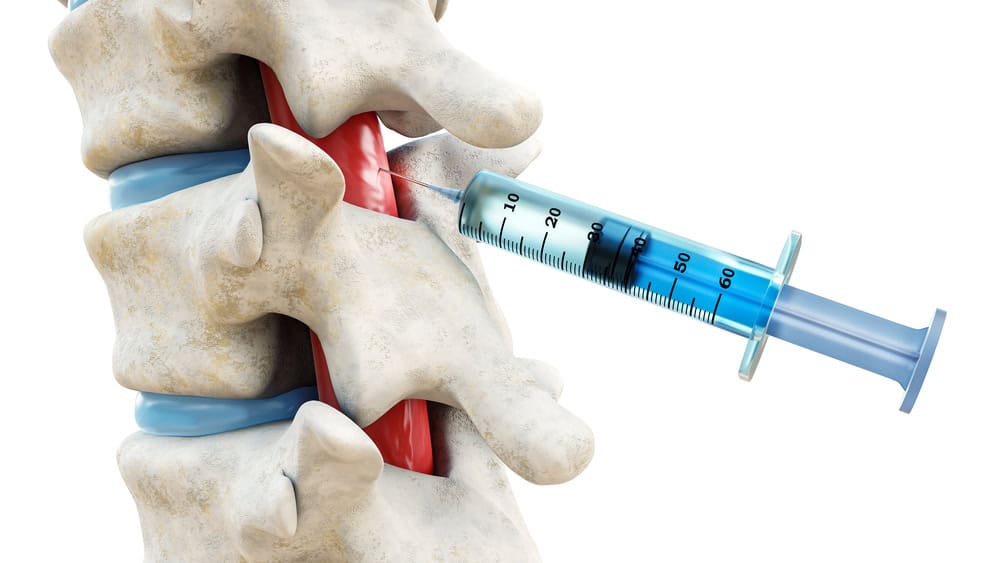
- Epidural steroid injection. UK guidance says doctors can consider an injection of local anesthetic and steroid for acute and severe sciatica.[9]
- Surgery. MedlinePlus describes surgery as usually the last resort.[8] In a large trial, early surgery for a herniated disc eased leg pain faster than starting with non-surgical care, but results were similar after a year.[6]
When to get medical help
Call 911 or go to the ER if you have sciatica and any of these. They can be signs of cauda equina syndrome, a rare but serious problem with the nerves at the base of the spine that needs urgent treatment.[1][3]
- numbness around or under your genitals, or around your bottom (anus)
- trouble starting to pee, not being able to pee, or not being able to control when you pee
- not noticing when you need to poop, or not being able to control your bowels
- sciatica on both sides, or weakness or numbness in both legs that is severe or getting worse
Don’t drive yourself. Ask someone to take you, or call 911.[1]
Contact your doctor right away if you have:[8]
- a fever with back pain and no clear reason
- back pain after a severe blow or fall
- redness or swelling on your back or spine
- new weakness or numbness in your buttock, thigh, leg or pelvis
- burning when you pee, or blood in your pee
- pain that is worse when you lie down, or wakes you at night
- severe pain and you can’t get comfortable
Also contact your doctor if:[8]
- weight loss you can’t explain
- you take steroids or inject drugs
- this episode has lasted longer than 4 weeks, or feels different from and worse than past episodes
Common questions
Is walking good for sciatica?
Yes, as long as you take it gently. The NHS advises starting gentle exercise as soon as you can, because anything that gets you moving can help.[1] For some people, especially when spinal stenosis is the cause, pain gets worse after walking more than a few yards.[8] If that happens to you, mention it to your doctor, since treatment depends on what is causing the sciatica.[8]
Can sciatica become permanent?
Most people recover, but not everyone. Sciatica can lead to permanent numbness or weakness in the leg,[8] which is why new or worsening weakness needs a doctor promptly.
Is it better to sit or stand with sciatica?
Neither, for long stretches. Sciatica pain can get worse after standing or sitting, and MedlinePlus advises against long periods of sitting or lying with pressure on your buttocks.[8] Change position often and keep moving as much as you can.[1]
Do I need another MRI to know if I’m healing?
Usually not. In a follow-up of sciatica patients, MRI scans at 1 year didn’t tell apart the people who had recovered from those who hadn’t. A disc herniation was still visible in about a third of each group.[10] Tests are often not needed unless pain is severe or long-lasting, so how you feel and what you can do are better guides.[8]
Sponsored · Back pain program
Start tonight with a physical therapist’s routine
Get instant access to the Back Pain Breakthrough videos on any device, and see today’s price on the official site.
Official site · opens in a new tab
Free · From APM Health
Get our free morning movement routine
A short, gentle routine for easing a stiff back into the day. Sign up now and we’ll email it as soon as it’s ready.
- Free
- Sent as soon as it’s ready
- One email a week at most
Unsubscribe any time. Privacy policy
How we checked this article
Medical review: pending. A clinician hasn’t reviewed this article yet. We last checked it against the sources below on November 3, 2026.
Sources
- NHS. Sciatica. Page last reviewed December 3, 2024.
- Aina A, May S, Clare H. The centralization phenomenon of spinal symptoms: a systematic review. Manual Therapy. 2004;9(3):134-143. PubMed 15245707
- American Association of Neurological Surgeons. Cauda equina syndrome. April 5, 2024.
- National Institute of Arthritis and Musculoskeletal and Skin Diseases (NIH). Back pain.
- Lassere MN, Johnson KR, Thom J, Pickard G, Smerdely P. Protocol of the randomised placebo controlled pilot trial of the management of acute sciatica (SCIATICA): a feasibility study. BMJ Open. 2018;8(7):e020435. PubMed 29980542
- Peul WC, et al. Surgery versus prolonged conservative treatment for sciatica. New England Journal of Medicine. 2007;356(22):2245-2256. PubMed 17538084
- Fritz JM, et al. Physical therapy referral from primary care for acute back pain with sciatica: a randomized controlled trial. Annals of Internal Medicine. 2021;174(1):8-17. Full text
- MedlinePlus (US National Library of Medicine). Sciatica. Reviewed August 27, 2024.
- NICE. Low back pain and sciatica in over 16s: assessment and management (NG59). Last updated July 29, 2026. UK guidance.
- el Barzouhi A, et al. Magnetic resonance imaging in follow-up assessment of sciatica. New England Journal of Medicine. 2013;368(11):999-1007. PubMed 23484826
- Dahm KT, et al. Advice to rest in bed versus advice to stay active for acute low-back pain and sciatica. Cochrane Database of Systematic Reviews. 2010;(6):CD007612. PubMed 20556780
- Steffens D, et al. Prevention of low back pain: a systematic review and meta-analysis. JAMA Internal Medicine. 2016;176(2):199-208. PubMed 26752509