How we make money: Some links on this page are affiliate links, marked “Sponsored.” If you buy through one, we may earn a commission. It doesn’t change what we write. This article is general information, not medical advice.
Your core is more than your abs. It’s the muscles around your trunk, including your pelvis, lower back, hips and stomach.[1] Mayo Clinic notes that weak core muscles can leave you more prone to poor posture, lower back pain and muscle injuries, and that strengthening them may help back pain get better.[1]
Below are five core exercises for back pain, with the steps, holds and repeats from the American Academy of Orthopaedic Surgeons (AAOS) spine conditioning program, plus Mayo Clinic’s version of the bridge. We also cover when to start and the warning signs that need a doctor before any exercise.
In brief
- Staying active is the main advice for most back pain. Long spells in bed are not recommended.
- The five moves below come from the AAOS spine conditioning program, which AAOS says should be done under your doctor’s supervision. You shouldn’t feel pain during an exercise, so stop any move that hurts.
- Back pain with numbness around your genitals or bottom, bladder or bowel changes, a fever, or after a bad fall needs medical help first.
Why core strength matters for back pain
Core exercises train the muscles of your trunk to work together. That improves your balance and stability, which most sports and other physical activities depend on.[1]
Sponsored · Back pain program
Want a back routine built by a physical therapist?
Physical therapist Dr. Steve Young, DPT, made The Back Pain Breakthrough for lower back pain: gentle moves in short follow-along videos you can watch on any device.
Instant access · opens in a new tab
Strong core muscles make many daily tasks easier, from bending down to tie your shoes to reaching for a glass on a high shelf.[1] You don’t need equipment or a gym: any exercise that uses your stomach and back muscles together counts.[1]
Some things raise your risk of low back pain. They include being over 30, being overweight, not exercising, smoking, feeling stressed or depressed, and work with heavy lifting, bending and twisting.[2] Exercise is important for preventing back pain. According to MedlinePlus, it can improve your posture, strengthen your back, make you more flexible, help you lose weight and help you avoid falls.[3]
When to start core exercises

If your back has just started hurting, you don’t need to wait weeks in bed. Bed rest is not recommended. Unless you have signs of a serious cause, stay as active as you can.[3] The NHS gives the same advice: keep up your daily activities and try some exercises and stretches for back pain.[4]
MedlinePlus, from the US National Library of Medicine, suggests this timeline for a new episode of low back pain:[3]
- Cut back on activity only for the first couple of days, then slowly return to your usual activities.
- Avoid heavy lifting and twisting your back for the first 6 weeks after the pain began.
- After 2 to 3 weeks, gradually start exercising again, beginning with light aerobic activity such as walking, riding a stationary bike or swimming.
Strengthening exercises are important, but starting them too soon after an injury can make your pain worse. A physical therapist can tell you when to begin and how to do them.[3] For long-term back pain, physical therapy with stretching and strengthening exercises is one of the treatments doctors may suggest.[2]
5 core exercises to strengthen your lower back
All five moves come from the AAOS spine conditioning program, a set of exercises to help you get back to daily activities after a back injury or surgery. AAOS says the program should be done under your doctor’s supervision, so ask your doctor or physical therapist which exercises suit you.[5]
Before you start: warm up with 5 to 10 minutes of low-impact activity, like walking or riding a stationary bike.[5] You should not feel pain during any of these exercises. If you do, stop and talk to your doctor or physical therapist.[5]
1. Abdominal bracing
- Lie on your back on the floor with your knees bent and your arms at your sides.
- Tighten your stomach muscles so that your stomach pulls in, away from your waistband and toward the floor.
- Keep your lower back flat against the floor.
- Hold for 15 seconds, then relax.
AAOS dose: 5 repeats, daily.[5]
2. Hip bridge
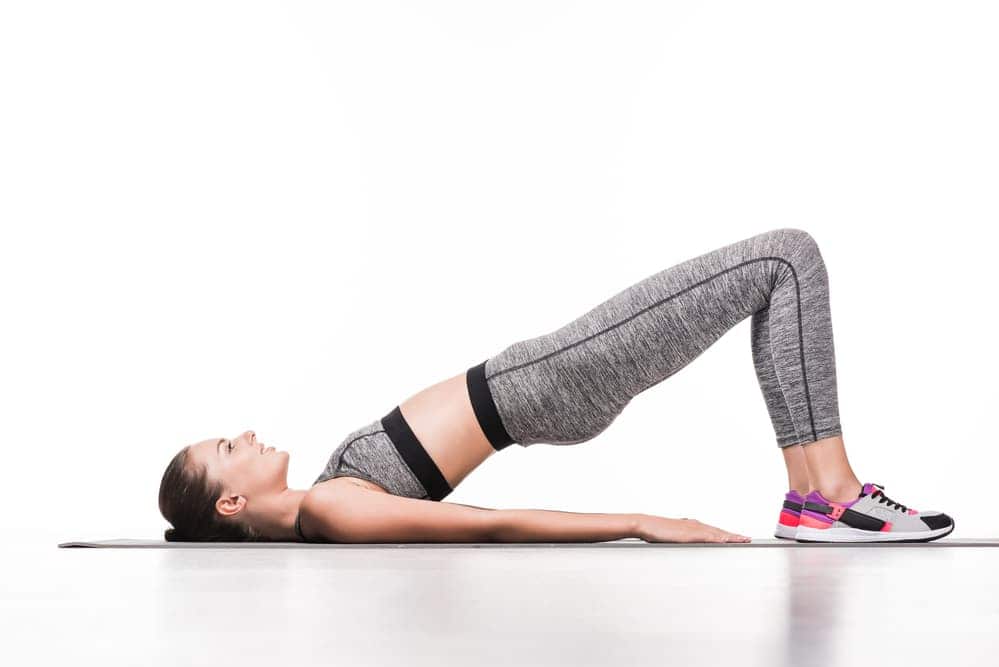
- Lie on your back on the floor with your arms at your sides, knees bent and feet flat on the floor.
- Tighten your stomach and buttock muscles.
- Lift your hips until your body forms a straight line from your shoulders to your knees.
- Hold for 15 seconds, then slowly lower and repeat.
AAOS dose: 5 repeats, daily. Keep your weight over your shoulder blades and don’t tense your neck.[5]
Mayo Clinic describes the bridge in a slightly different way. Keep your back neutral, neither arched nor pressed into the floor, and don’t let your hips tilt. Hold for three deep breaths without breaking your form.[1]
3. Bird dog
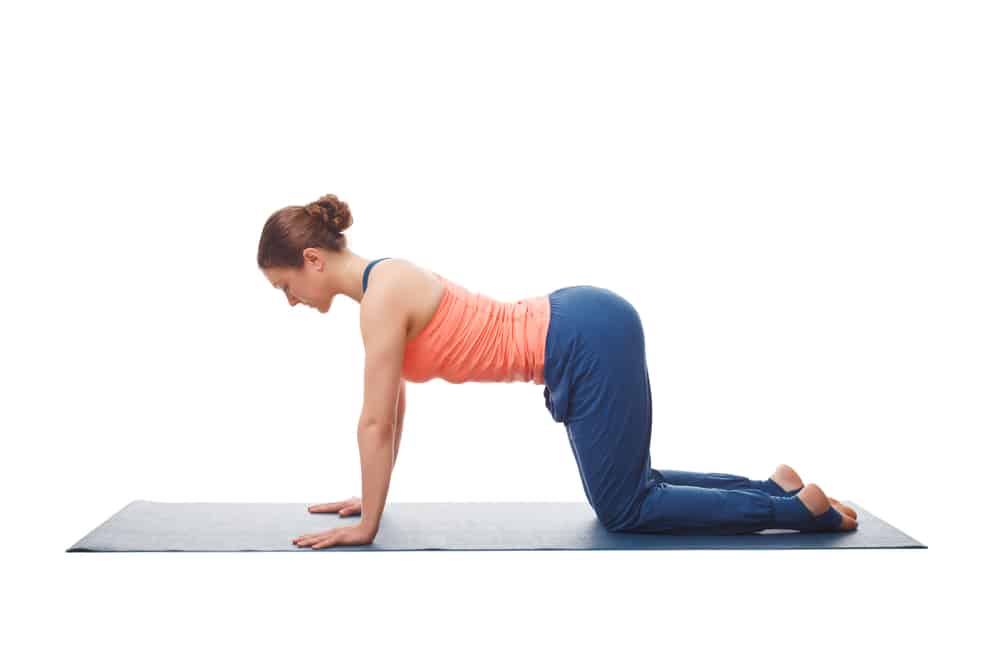
- Start on your hands and knees, with your shoulders over your hands and your hips directly over your knees.
- Tighten your stomach muscles and raise one arm straight out to shoulder height, level with your body. Hold until you feel balanced.
- Slowly lift the opposite leg and stretch it straight out from your hip.
- Tighten your buttock and thigh muscles and hold for 15 seconds.
- Slowly return to the start and repeat with the other arm and leg.
AAOS dose: 5 repeats, daily. Keep your stomach tight and your back flat so you stay balanced.[5]
4. Plank
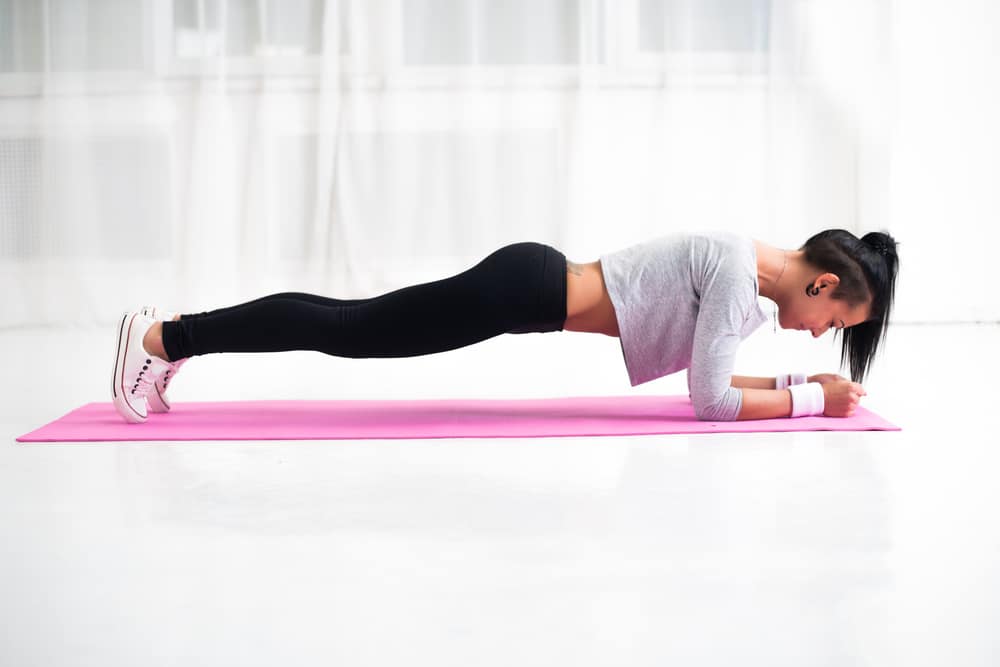
- Lie on your stomach with your forearms on the floor and your elbows directly below your shoulders.
- Tighten your stomach muscles and lift your hips off the floor.
- Squeeze your buttocks and lift your knees off the floor.
- Keep your body straight and hold for 30 seconds. If you can’t, put your knees back on the floor and hold with just your hips lifted.
- Slowly lower, rest for 30 seconds, and repeat.
AAOS dose: 5 repeats, daily. Don’t let your pelvis sag toward the floor.[5]
5. Modified side plank
- Lie on your side with your bottom leg slightly bent and your top leg straight. Rest on your forearm, with your elbow directly under your shoulder.
- Tighten your stomach muscles and raise your hip off the floor.
- If you can, straighten your bottom leg and lift your knee off the floor too.
- Keep your body straight and hold for 15 seconds.
- Slowly lower, then repeat on the other side.
AAOS dose: 5 repeats, daily. Keep your neck in line with your spine, and don’t shrug your shoulder up to your ear.[5]
How long to keep going
AAOS suggests continuing its spine program for 4 to 6 weeks, unless your doctor or physical therapist tells you otherwise. After that, doing the exercises 2 to 3 days a week keeps up the strength and range of motion in your back.[5] If you’re not sure how to do an exercise, or how often, ask your doctor or physical therapist.[5]
Add gentle stretches
The AAOS program starts with stretches after the warm-up, moves on to strengthening, then repeats the stretches at the end. AAOS says stretching the muscles you strengthen helps restore range of motion and prevent injury, and gentle stretching afterward can help reduce muscle soreness.[5] For moves to try, see our guide to lower back stretches.
Sponsored · Back pain program
Rather press play than read the steps?
In The Back Pain Breakthrough, physical therapist Dr. Steve Young guides you through gentle moves for lower back pain, including one you do in bed. Start tonight on any device.
Everyday habits that protect your back
How you lift, sit and stand matters too. MedlinePlus suggests these habits to lower the chance of back pain:[3]
- Lift with your legs. Bend at your knees, not your waist, tighten your stomach muscles as you lift, and hold the object close to your body. Don’t twist while you bend, lift or carry. If something is too heavy or awkward, get help.
- Break up long spells of standing. If you have to stand at work, rest each foot on a stool in turn.
- Set up your seat. Use a chair with a straight back and an adjustable seat and back. A small pillow or rolled towel behind your lower back helps when you sit or drive for a long time.
- Take breaks on long drives. Stop and walk around every hour.
- Quit smoking, and lose weight if you need to.
Activities like walking, swimming, yoga and pilates may also help ease back pain.[4] If you’d like a class to follow, the NHS has a free 29-minute pilates video for chronic back pain that focuses on the strength and flexibility of the muscles that support the back. The NHS suggests speaking to a doctor first if you have back pain.[6] For more ideas, read our healthy habits to reduce back pain.
When to get medical help
Call 911 or go to the ER if you have back pain and any of these:[4]
- pain, tingling, weakness or numbness in both legs
- loss of feeling around your genitals or anus
- changes in your bladder or bowels, such as trouble peeing or losing control of your bladder or bowels
- changes in how your genitals feel during sex, or not being able to get or keep an erection
- chest pain
- pain that started after a serious accident, such as a car accident
Some of these can be signs of cauda equina syndrome, a problem with the bundle of nerves at the base of the spine that needs immediate medical attention.[7] Don’t drive yourself. Ask someone to take you, or call 911.[4]
Contact your doctor right away if you have:
- back pain after a severe blow or fall[3]
- a fever with back pain, or you feel hot, cold, shivery or generally unwell[4][3]
- severe pain that starts suddenly or gets worse quickly[4]
- pain that is worse when you lie down, or wakes you at night[3]
- weakness or numbness in your buttocks, thigh, leg or pelvis[3]
- back pain and a history of cancer[3]
- pain that travels down your leg below the knee[3]
- trouble walking or keeping your balance[3]
Also see a doctor if you’re losing weight without trying, the pain has lasted longer than 4 weeks or isn’t improving with home care, or it’s stopping you from doing your day-to-day activities.[4][3]
Common questions
Are crunches good for back pain?
The AAOS spine program does include one, as its last exercise: knees bent, back flat on the floor, lift your head and shoulder blades, hold for 2 seconds and lower slowly, without pulling on your head. Like the rest of the program, it’s meant to be done under your doctor’s supervision.[5] We left it out of the five moves above. Abdominal bracing works the same stomach muscles without lifting your head and shoulders.[5] As with every move in the program, you shouldn’t feel pain, so stop any crunch that hurts.[5]
How long do core exercises take to help back pain?
None of our sources gives a timeline for core exercises on their own. Most people with a new episode of back pain improve or recover within 4 to 6 weeks, often sooner.[3] If your pain has lasted longer than 4 weeks, see your doctor.[3]
What are the best exercises to strengthen your lower back?
There’s no single best move. In the AAOS program, the bird dog, plank, side plank and hip bridge all work the muscles of the lower back.[5] Light aerobic activity counts too: MedlinePlus says walking, riding a stationary bike and swimming strengthen the muscles in your stomach and back.[3] Your doctor or physical therapist can tell you which exercises suit your back best.[5]
Sponsored · Back pain program
Start your back routine tonight
Get instant access to The Back Pain Breakthrough, a gentle video routine for lower back pain from physical therapist Dr. Steve Young, and see today’s price on the official site.
Official site · opens in a new tab
Free · From APM Health
Get our free morning movement routine
A short, gentle routine for loosening a stiff back at the start of the day. Sign up now and we’ll email it as soon as it’s ready.
- Free
- Sent as soon as it’s ready
- One email a week at most
Unsubscribe any time. Privacy policy
How we checked this article
Medical review: pending. A clinician hasn’t reviewed this article yet. We last checked it against the sources below on November 3, 2026.
Sources
- Mayo Clinic Staff. Core exercises: Why you should strengthen your core muscles. Mayo Clinic. March 25, 2025.
- MedlinePlus (US National Library of Medicine). Low back pain: chronic. Reviewed April 1, 2025.
- MedlinePlus (US National Library of Medicine). Low back pain: acute. Reviewed June 27, 2026.
- NHS. Back pain. Page last reviewed March 5, 2026.
- American Academy of Orthopaedic Surgeons, OrthoInfo. Spine conditioning program. Updated by Daniel K. Park, MD, FAAOS.
- NHS. Back pain pilates video workout. Video last reviewed August 5, 2025.
- American Association of Neurological Surgeons. Cauda equina syndrome. April 5, 2024.